We Don't Watch TV the Same Way Anymore — And Honestly, That Might Be Okay
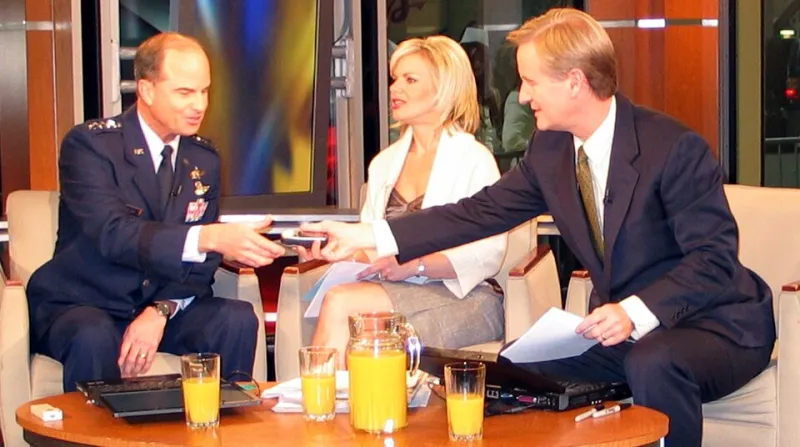
Photo: Captain Johnny Rea (United States Air Force- Space Command Public Affairs), Public domain, via Wikimedia Commons
There was a time — not that long ago, really — when the TV schedule ran your life. Thursday nights were sacred. Season finales were events. If you missed an episode of Friends or The Sopranos or Lost, you were going to spend the next morning nodding along to conversations you couldn't fully participate in, praying nobody spoiled the ending before you caught the rerun.
That shared experience had a kind of cultural gravity to it. Everyone was watching the same thing, at the same moment, and the collective reaction was part of the point.
That world is basically gone. And I think we need to talk honestly about what we've gained and lost — because it's genuinely more complicated than either the nostalgists or the streaming evangelists want to admit.
The Last of the Appointment TV Holdouts
Let's be real — appointment television isn't completely dead. Live sports are still pulling massive simultaneous audiences. Reality competition shows like The Voice and Survivor still generate real-time social media moments. Award shows, presidential debates, the Super Bowl halftime performance — these events still function like the old model, drawing people into a shared now.
But scripted drama? Premium comedy? The kind of prestige television that used to define what we meant when we said a show "mattered"? That stuff has almost entirely migrated to the on-demand model, where every viewer is on their own timeline.
When Netflix drops an entire season of a show at midnight, it's not creating a shared viewing experience — it's creating a shared starting line for a race that everyone runs at their own pace. Some people finish in a weekend. Others take three months. By the time the last person catches up, the cultural conversation has already moved on.
What We Actually Lost
I don't want to be dismissive about what disappeared when appointment TV faded. There was something genuinely valuable about the collective gasp — the moment when millions of people simultaneously watched a jaw-dropping plot twist and then immediately needed to talk about it with whoever was nearby.
The Game of Thrones Red Wedding. The Breaking Bad finale. The last episode of The Americans. These moments still generated enormous cultural conversation, but they were fragmented across weeks and months as different viewers caught up at different speeds. The spoiler anxiety alone changed the texture of how people engaged with the shows.
More than that, appointment TV created a kind of democratic shared culture. When Seinfeld was on, it didn't matter if you were in a small town in Nebraska or downtown Manhattan — you were watching the same thing on the same night, and that gave you something to talk about with basically anyone. That's harder to replicate now.
But Something New Is Growing
Here's what I keep coming back to, though: the fans didn't go anywhere. They just reorganized.
Look at what's happened with online fan communities. Reddit threads for prestige dramas now function as rolling, asynchronous watch parties where viewers at every stage of a series coexist and discuss — with spoiler tags serving as the new social contract. Discord servers for specific shows have become genuinely vibrant spaces where people who finished a season years apart can still find meaningful conversation.
Then there are the more deliberate workarounds fans have invented. Watch parties through platforms like Teleparty (formerly Netflix Party) let friend groups sync up their streams across different cities, with a shared chat running alongside the video. It's appointment television rebuilt from scratch, on the viewers' terms rather than a network executive's.
TikTok and YouTube have created an entirely new layer of communal viewing experience too — reaction videos, episode breakdowns, fan theories, and recap content that extends the conversation well beyond the show itself. In some ways, the discourse around a great series is richer and more sustained now than it ever was in the appointment TV era. It just looks different.
The Fragmentation Problem Is Real, Though
I'd be lying if I said the streaming landscape doesn't create genuine friction for the kind of broad cultural moments that used to come naturally. When content is scattered across Netflix, Hulu, Max, Apple TV+, Peacock, Paramount+, and a dozen other services, the chances that any two random people are watching the same thing at the same time drops dramatically.
This is partly why live sports have become so disproportionately valuable in the streaming era. They're one of the last reliable mechanisms for creating a genuine shared now. It's no coincidence that every major streaming platform is now scrambling to acquire sports rights — they're buying back the thing the on-demand model accidentally gave away.
For everything else, we're living in a world of micro-communities rather than mass audiences. The people who love a specific show really love it and find each other with remarkable efficiency. But the days of a single series being genuinely universal — the kind of show where you could reference it in a conversation with a stranger and be confident they'd know what you meant — those days are rarer now.
A New Kind of Togetherness
My honest take? I think we're in a transitional moment, not an endpoint. The ways people connect around television are evolving faster than most critics and commentators are giving credit for. The tools exist for rich, communal engagement with TV — they're just more intentional now. You have to seek out your people rather than stumbling into shared experience by default.
That's a tradeoff, not a pure loss. The old model was convenient and universal but also pretty passive — you watched what was on because it was on. The new model asks more of you, but it also gives you more in return. Your fandom can go deeper. Your community can be more specific. Your relationship with a show can be genuinely yours in a way it couldn't be when everyone was moving through it in lockstep.
Appointment television gave us something to talk about at the water cooler. What's replacing it might actually give us something more lasting: real communities built around the specific stories that hit us hardest.
That sounds like a trade worth making.