Too Many Choices, Not Enough Togetherness: How Streaming Broke the Family TV Night
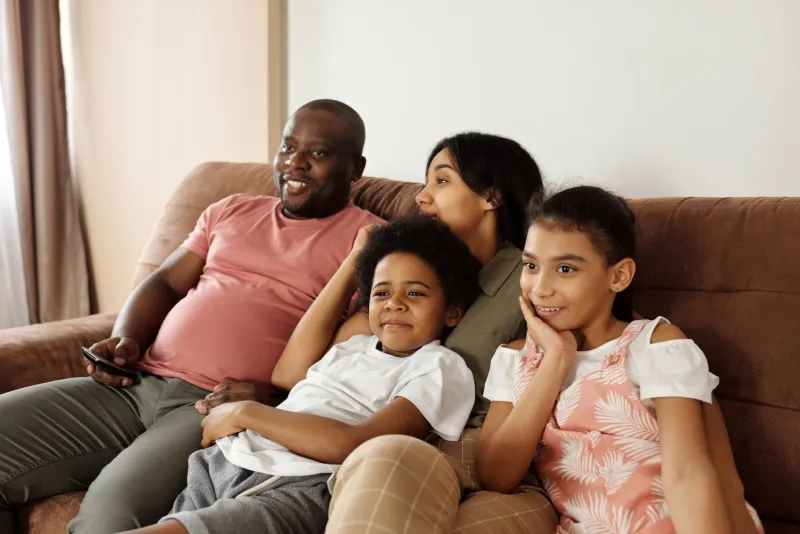
Picture this: It's Friday night. Everyone's finally home, the pizza is on the way, and someone suggests watching something together. Forty-five minutes later, you're still scrolling. The pizza's gone cold. Someone has retreated to their bedroom. Another person is watching TikTok on their phone. The "family movie night" has officially collapsed before a single frame of content played.
If that sounds familiar, you're not alone. Across America, households are discovering that having access to every show ever made doesn't actually make it easier to watch TV together — it makes it harder. The streaming revolution handed us infinite options and, in doing so, quietly stole one of the simplest pleasures of home life.
When Fewer Channels Actually Meant More Connection
There's a reason your parents or grandparents talk about gathering around the TV like it was a communal campfire. When there were only a handful of channels, the decision was almost made for you. You watched what was on. You complained about it together, laughed about it together, fell asleep during it together. That shared experience — even when the content was mediocre — created a kind of low-effort togetherness that's surprisingly hard to replicate now.
Broadcast television, for all its limitations, was a social equalizer inside the home. Everyone watched the same primetime lineup. You talked about it at the dinner table the next morning. It gave families a common cultural language.
Streaming didn't just change what we watch. It changed how we decide what to watch — and that shift has had some genuinely messy consequences for households trying to share a couch.
The Algorithm Is Not Your Friend (At Least, Not Everyone's)
Here's where it gets interesting. Every major streaming platform — Netflix, Hulu, Disney+, Max, you name it — runs on recommendation engines designed to serve you specifically. Your watch history, your ratings, your browsing patterns: all of it feeds into a system that learns your preferences and nudges you toward more of the same.
That's great when you're watching solo. It's a quiet disaster when you're trying to watch as a group.
Because the algorithm doesn't know your family. It knows profiles. And each profile in a household has been trained on completely different tastes. The teenager's profile is loaded with anime and true crime. The parents' account leans toward prestige dramas and home renovation shows. The younger kid's history is basically just animated movies on a loop. When you sit down together, there's no algorithm built to serve all of you at once — so the homepage looks different to everyone, and nobody can even agree on what they're looking at.
The result is what psychologists call choice overload, and it's very real. Studies have consistently shown that the more options people are given, the harder it becomes to commit to any single one. Streaming libraries with tens of thousands of titles don't free us — they paralyze us.
The Generational Gap Is Wider Than You Think
Layered on top of the algorithm problem is a genuine generational divide in viewing preferences that streaming has only deepened.
Younger viewers — Gen Z in particular — have grown up with YouTube, short-form content, and the ability to skip anything that doesn't grab them in the first 30 seconds. The idea of committing to a two-hour movie or a slow-burn drama series feels genuinely uncomfortable to a lot of them. They're not being difficult; their media consumption habits have literally been shaped by a different set of platforms.
Older viewers, meanwhile, often want something with a clear narrative arc, recognizable stars, and a satisfying ending. They didn't grow up with cliffhangers designed to keep you subscribed for another month.
Middle-school-aged kids? They want something funny, fast, and ideally something their friends are already talking about. Which probably isn't the same show their older sibling is into, let alone their parents.
When you throw all of these preferences into one living room, "let's watch something together" becomes a surprisingly loaded request.
Decision Fatigue Is a Real Viewing Killer
There's another layer here that doesn't get talked about enough: by the time most families sit down to watch TV together, everyone is already tired. Parents are coming off long workdays. Kids have been through school, activities, homework. Nobody has the mental bandwidth for a 20-minute negotiation.
And yet that's exactly what streaming demands. Browsing a platform requires active decision-making. Every scroll is a micro-choice. Every thumbnail is a mini-pitch. It's mentally exhausting in a way that just turning on NBC at 8 p.m. never was.
The irony is that we built these platforms to give us more control over our entertainment — and now the act of choosing entertainment has become its own source of stress.
How to Actually Fix Family Movie Night
Okay, enough diagnosis. Here's the practical part — because this problem is solvable, and it doesn't require canceling all your subscriptions.
Take turns, no questions asked. Set up a simple rotation: this week, one person picks. No vetoes, no negotiations. Everyone watches what that person chose. It removes the group decision entirely and, bonus, you'll end up watching things you'd never have found on your own.
Use a "pre-approved list" system. During the week, each family member adds one title to a shared list. On family night, you pick from that list only. It limits the scope of the decision and ensures everyone already has something in the running.
Lean into genres that genuinely cross generations. Nature documentaries (especially anything narrated by David Attenborough), competition reality shows, sports events, and broad comedies tend to work across age groups better than most other content. Don't underestimate the power of a good cooking competition to unite a divided household.
Bring back appointment viewing — artificially. Pick a show the whole family will watch together, one episode per week, on a set night. The scarcity creates anticipation and gives everyone something to look forward to. It mimics the old broadcast model in the best way.
Accept that "together" doesn't always mean the same screen. Sometimes family TV night can mean everyone's in the same room watching different things on their own devices — but talking, laughing, showing each other clips. That's still connection. Don't let the perfect be the enemy of the good.
One Remote, Many Stories
The promise of streaming was always about access — every channel, every story, anytime you want it. And that promise has absolutely been kept. The content has never been better or more plentiful.
But access alone doesn't create shared experience. That still requires a little intentionality, a little compromise, and occasionally, someone willing to watch a show they didn't pick just because the people they love wanted to see it.
The family TV night isn't dead. It just needs a little help navigating the remote.