Too Much of a Good Thing: How Infinite Streaming Choices Turned Watching TV Into a Part-Time Job
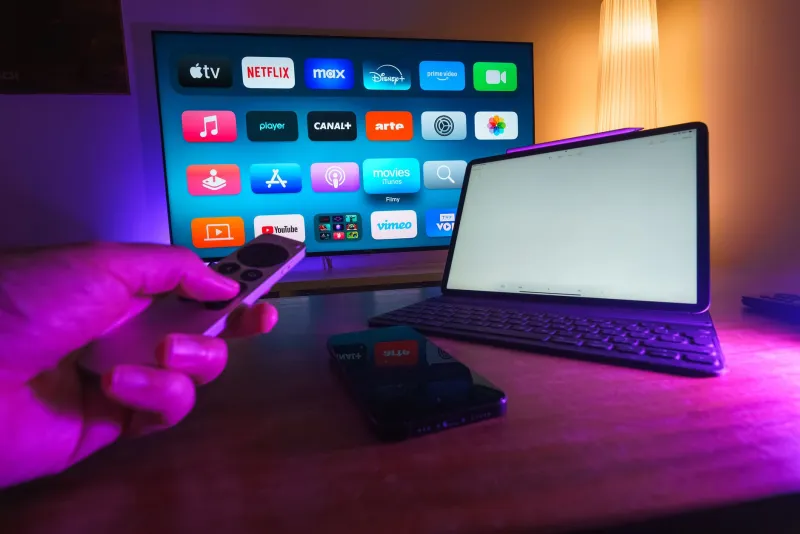
Remember when Friday night meant flipping through maybe forty channels, landing on something decent, and just... watching it? Nobody called that settling. Nobody felt guilty about it. You watched what was on, you laughed or cried or fell asleep, and that was that.
Now picture your average Tuesday evening. You've got an hour to spare. You open your streaming app — maybe two or three of them — and you start scrolling. Twenty minutes later, you're still scrolling. You've hovered over a dozen thumbnails, read half as many descriptions, started one episode, decided the vibe was off, and somehow ended up rewatching a show you finished two years ago. Sound familiar?
Welcome to the paradox that nobody in Silicon Valley wants to talk about: the very thing that makes modern streaming so impressive — an almost incomprehensible library of content available every second of every day — is quietly making the experience of watching television more stressful than it's ever been.
When More Becomes a Burden
Psychologists have a name for what happens when you give people too many options. Barry Schwartz wrote a whole book about it back in 2004 — The Paradox of Choice — and his argument was simple: more options don't make us happier. They make us more anxious, more indecisive, and ultimately less satisfied with whatever we do choose, because we're haunted by everything we didn't pick.
Schwartz was talking about shopping for jeans. But swap out denim for streaming catalogs and the logic holds up perfectly. When Netflix, Hulu, Max, Disney+, Peacock, Apple TV+, and Paramount+ are all competing for your attention simultaneously — each one stacked with hundreds of originals, licensed classics, and whatever algorithmic bait they've cooked up this month — the act of choosing something to watch stops being a pleasure and starts being a problem to solve.
And Americans are feeling it. Surveys consistently show that a significant chunk of viewers report spending more time looking for something to watch than actually watching anything. That's not a quirk. That's a design flaw dressed up as a feature.
The 'Optimize Everything' Trap
Here's where it gets a little darker. Streaming didn't just give us more content — it gave us the implicit pressure to make the right choice with that content. Every viewing hour suddenly feels like a small investment, and nobody wants to blow their limited free time on something that turns out to be mediocre.
So we research. We check Rotten Tomatoes scores. We skim Reddit threads asking whether a show is "worth it." We ask friends, consult best-of lists, and read recaps before committing to a pilot. We treat a 45-minute episode of television like we're booking a vacation.
This isn't entirely irrational — there really is a lot of bad TV out there, and time really is finite. But the energy we pour into avoiding a disappointing watch has started to dwarf the energy we used to spend just enjoying a decent one. We've optimized the fun right out of it.
The old appointment television model, for all its rigidity, actually solved this problem without meaning to. When a show aired at 9 p.m. on Thursday and that was your only shot at it, you sat down and watched. The decision was made for you. The scarcity was the feature.
The Guilt of the Unwatched Queue
There's another wrinkle that doesn't get talked about enough: the watchlist. Every major platform encourages you to save titles for later, which sounds helpful until your "My List" or "Watchlist" or whatever they're calling it this month becomes a graveyard of good intentions.
That documentary about the coral reefs you saved in January. The critically acclaimed foreign drama you bookmarked after reading a glowing review. The three-season prestige series your coworker swore would change your life. They're all still there, quietly judging you.
For a lot of viewers, the watchlist has stopped functioning as a helpful queue and started functioning as a to-do list you never finish. And every time you scroll past it to rewatch The Office for the fifth time, there's a tiny pang of something — guilt, maybe, or just the vague sense that you're not using your streaming subscription to its full potential.
Which is absurd, when you think about it. We're feeling guilty about television now. We have truly come a long way.
The Irony at the Heart of On-Demand
The promise of on-demand viewing was liberation. No more rushing home for the season finale. No more VCR timers. No more missing an episode because you had a life to live. Watch what you want, when you want, at the pace you want. That promise was real, and it genuinely changed things for the better in a lot of ways.
But liberation without structure has a funny way of becoming its own kind of pressure. When everything is always available, nothing ever feels urgent. And when nothing feels urgent, it's surprisingly easy to spend three hours deciding what to watch and then giving up entirely and going to bed.
The platforms know this, by the way. It's why autoplay exists. It's why "Because you watched..." recommendations are so prominent. It's why some services are now experimenting with curated "channels" that just play content in a linear stream — essentially recreating the old broadcast model inside the on-demand world. The wheel, as they say, turns.
So What Do You Actually Do About It?
There's no clean solution here, and anyone selling you one is probably trying to get you to subscribe to something. But a few things seem to genuinely help.
Setting a time limit on browsing — two minutes, five minutes, whatever — before committing to the first thing that looks reasonably interesting tends to short-circuit the scroll spiral. Letting a friend or partner make the call removes the optimization pressure entirely. And occasionally just... watching whatever's on, without consulting a rating or a review, reconnects you with the experience of television as something you stumble into rather than something you engineer.
None of that fixes the underlying design of these platforms, which are built to keep you engaged with the catalog as much as with the content. But it might make Tuesday night feel a little less like homework.
At One TV, we believe that every channel and every story deserves a real shot — not just a two-second hover before you keep scrolling. The content is out there. Sometimes the hardest part is just letting yourself watch it.