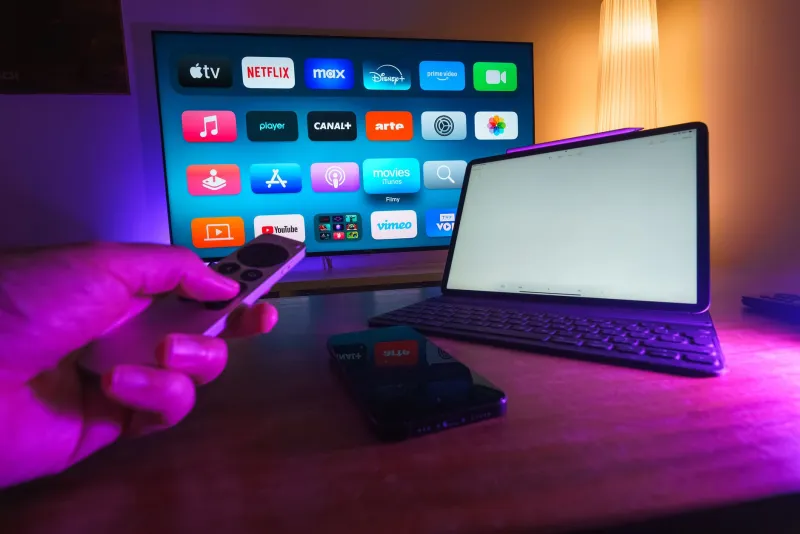
The Bill That Broke the Budget: What Streaming Is Actually Costing American Households in 2024

Remember when dropping cable felt like a financial power move? You were done paying $150 a month for 300 channels you never watched. Streaming was the answer — lean, flexible, and cheap. Pick what you want, pay for what you use, cancel anytime. The pitch was clean. The reality, a decade later, is a lot messier.
Because here's the thing nobody warned us about: we didn't replace cable with one streaming service. We replaced it with five. Or six. Or eight. And suddenly, the bill looks awfully familiar.
Let's Actually Do the Math
Pull up your bank statement and count how many streaming charges hit your account every month. If you're the average American household, the answer might surprise you. According to recent industry data, US consumers subscribe to an average of four to five streaming services simultaneously. Sounds manageable until you start adding up the actual numbers.
Here's a realistic breakdown for a household trying to cover the major bases in 2024:
- Netflix (Standard with ads): $6.99/month — or $15.49 for ad-free
- Disney+ (With ads): $7.99/month — or $13.99 ad-free
- Hulu (With ads): $7.99/month — or $17.99 ad-free
- Max (With ads): $9.99/month — or $15.99 ad-free
- Apple TV+: $9.99/month
- Peacock (Premium): $7.99/month
- Paramount+: $5.99/month with ads
- Amazon Prime Video (standalone or bundled): $8.99/month
Go ad-free across the top five services alone and you're already flirting with $75 to $80 a month. Add a couple more mid-tier subscriptions and you've blown past $100 without blinking. Tack on an internet bill — which you need to stream anything — and suddenly you're staring down $160, $180, even $200 a month depending on your provider and plan.
For context, the average American cable bill before cord-cutting became mainstream hovered around $100 to $120 a month. Including internet. Often including a landline nobody used.
So yes — for many households, streaming costs more than cable ever did.
The Ad-Tier Illusion
Streaming platforms got clever. When subscribers started flinching at price increases, the services didn't back down — they invented a new tier instead. Want to pay less? Sure, just sit through ads. It sounds like a fair trade until you realize what you're actually signing up for.
Ad-supported tiers aren't just cheaper versions of the same product. They often come with content restrictions, lower video quality, and limits on simultaneous streams or downloads. Netflix's ad tier, for example, doesn't let you download content for offline viewing. Disney+'s cheaper plan caps your streams. You're paying less money for a meaningfully different experience.
And here's the kicker: the ads are coming back heavier than ever. Early streaming ad loads were light — a few spots per hour. Now, some platforms are running ad breaks that rival traditional broadcast TV. You left cable to escape commercials. In some cases, they followed you.
For households that genuinely can't afford the premium tiers, the ad-supported options are still valuable. But let's be honest about what they are: a way for platforms to monetize viewers twice — once through subscriptions, once through advertisers.
Password Sharing: The Free Lunch Is Over
For years, millions of Americans quietly subsidized their streaming habits by sharing passwords with family members, roommates, or that one college friend who never changed their Netflix password after graduation. It was an open secret the industry tolerated because subscriber numbers looked better with the gray-area accounts included.
That era is done.
Netflix led the crackdown in 2023, and the results were dramatic — painful for users, profitable for the company. Other platforms watched closely and followed suit. Now, adding an "extra member" to your account can cost an additional $7 to $8 a month per person. Households that used to split costs across multiple people are now paying full freight on their own.
For a family where two adult children were sharing their parents' Netflix and Hulu accounts, the shift to individual subscriptions can add $30 to $40 a month to the household's total spending overnight. That's real money, and it's a cost that hit without much warning.
The Price Hike Treadmill
Even if you locked in a streaming service early at a low introductory rate, that price is almost certainly not what you're paying today. Across the board, streaming services have raised prices repeatedly over the past three years. Netflix alone has increased its standard plan price multiple times. Disney+ doubled its cost in the span of two years. Max, Peacock, and Paramount+ have all followed the same upward trajectory.
The pattern is familiar: launch at a low price to attract subscribers, build a content library, establish habit and loyalty, then gradually increase the rate while betting that cancellation feels like more of a hassle than just eating the new charge. It's the same playbook cable companies ran for decades. The medium changed. The business model didn't.
Real Households, Real Numbers
Consider a couple in their early 30s living in Chicago. They cut cable in 2019 and felt great about it — they were paying around $45 a month for Netflix and Hulu. By 2024, they've added Disney+ for a show they wanted to watch, Max for HBO content, and Apple TV+ after a free trial that they forgot to cancel and then decided to keep. Their monthly streaming total: $87. Their internet bill: $70. Total: $157 a month, or $1,884 a year.
Or take a family of four in suburban Texas. They kept cable for live sports and local news but added Netflix and Disney+ for the kids. They're paying $140 for cable, $30 for two streaming services, and $80 for internet. That's $250 a month — $3,000 a year — for television.
These aren't extreme cases. They're increasingly typical.
So What's the Move?
None of this means streaming is a bad deal. For plenty of households, especially those who watch strategically and rotate services instead of maintaining year-round subscriptions, the math still works out favorably. The key is treating streaming the way it was originally marketed: flexible, on your terms.
Watch what you came for, then cancel. Rotate between services across the year rather than maintaining everything simultaneously. Use ad-supported tiers when the price difference is significant and the content restrictions don't bother you. Bundle where it actually makes sense — the Disney/Hulu/ESPN bundle, for instance, can be genuinely cost-effective compared to buying each separately.
But go in with eyes open. The days of streaming as a scrappy, affordable alternative to cable are largely behind us. The industry matured, consolidated, and learned exactly how much consumers are willing to absorb before they push back.
Cutting the cord was never really about escaping the system. It was about finding a better seat at the same table. And these days, that seat is getting more expensive by the quarter.
At One TV, we believe you should have access to every channel and every story — but you should also know exactly what you're paying for. Because the best entertainment deal is the one you actually understand.