The Last Appointment: Why Live TV Is the One Thing Streaming Still Can't Kill
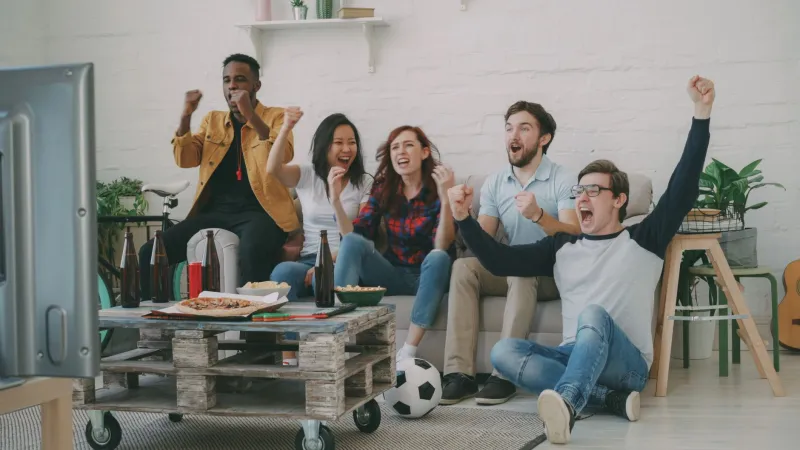
There's a moment during a live sporting event — a last-second field goal, a stunning upset, a buzzer-beater that nobody saw coming — where your phone lights up at the exact same second the crowd erupts on your TV. Your group chat explodes. Your neighbor yells through the wall. For a few seconds, you're not just watching television. You're experiencing something alongside millions of other people, all at once, with zero ability to pause or rewind your way out of the feeling.
Streaming can't bottle that. And the networks know it.
The On-Demand Revolution Left One Door Open
For the better part of the last decade, the story of American television has been one of liberation. We cut the cord. We canceled cable. We built our own prime time out of whatever we felt like watching at 11 p.m. on a Tuesday. Streaming platforms handed us control, and we ran with it.
But somewhere in the middle of all that freedom, something quietly held its ground. Live television — sports, awards shows, breaking news, election nights — never really left. It just waited.
The numbers back this up. The NFL's broadcast deals are worth more than ever, with the league pulling in over $100 billion in media rights across its current contracts. The Super Bowl still draws over 100 million viewers annually, making it practically the only thing left that the entire country watches simultaneously. The Oscars, the Grammys, March Madness, the World Series — these events command the kind of mass, undivided attention that no algorithm-driven recommendation engine can manufacture on demand.
Networks didn't stumble into this realization. They leaned into it hard.
Why Live Events Are a Competitive Weapon Now
Here's the paradox worth sitting with: the rise of streaming actually increased the strategic value of live television rather than diminishing it.
When everything is available on demand, scarcity becomes the most powerful thing a broadcaster can offer. A live event is, almost by definition, something you cannot truly replicate later. You can watch a recording of the game. You can catch the replay of the acceptance speech. But you already know how it ends. The tension is gone. The communal electricity that made it worth watching in the first place has evaporated.
Networks have been quietly weaponizing this for years. NBC structured its Peacock streaming service partly around live sports, including exclusive NFL playoff games. Amazon Prime Video grabbed Thursday Night Football. Apple TV+ landed Major League Baseball. Even Netflix, the company that practically invented the idea of watching TV on your own schedule, has started dipping into live events — hosting live comedy specials, a live roast of Tom Brady, and even a pair of NFL Christmas Day games in 2024.
Let that sink in. Netflix, the ultimate on-demand platform, is scheduling things you have to watch right now.
The Attention Economy Runs on Moments
There's a cultural mechanic at play here that goes beyond just ratings. Live events generate social media oxygen in a way that no bingeable drama series — however excellent — can match. When something wild happens at halftime, or a presenter reads the wrong name, or a musician pulls off a performance nobody expected, the internet reacts in real time. You either saw it live, or you're catching up to a conversation that already moved on without you.
For advertisers, this is gold. A 30-second spot during a live broadcast reaches eyeballs that haven't been trained to skip ads or fast-forward through commercial breaks. Live TV is one of the last places where the commercial break still functions as intended — because if you leave the room, you might miss something.
That dynamic keeps the money flowing into live content at rates that make streaming originals look almost modest by comparison.
What This Means for the Average Viewer
If you've been piecing together your entertainment diet purely from streaming subscriptions, you've probably noticed a few things creeping back into your life. A sports package here. A cable news habit there. Maybe you found yourself paying for a live TV add-on just to catch the championship game without driving to a bar.
The industry has noticed too. Streaming platforms aren't trying to replace live television anymore — they're trying to absorb it. The future of TV isn't a clean break between old-school broadcast and shiny new streaming. It's a messy, overlapping hybrid where the same platform might offer you a prestige drama you can watch whenever you want and a live sporting event that starts whether you're ready or not.
For viewers, this means the concept of "appointment television" isn't actually dead. It just got a new wardrobe. The appointment isn't about networks deciding when you watch anymore — it's about the event itself demanding your presence.
The Bigger Picture
What the live TV paradox ultimately reveals is something pretty human: we like having something to share. For all the genuine convenience of on-demand viewing, there's a loneliness baked into watching everything in isolation, on your own schedule, disconnected from the broader cultural moment.
Live television — at its best — is a reminder that TV was always about more than the content itself. It was about the shared experience of watching it together. Networks aren't just betting on sports and spectacle because they're out of ideas. They're betting on the fact that, no matter how sophisticated our streaming options get, we still want to be in the room where it happens.
And for now, at least, that room has a broadcast antenna.